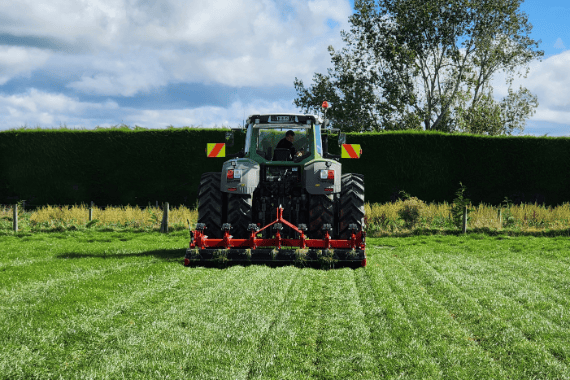
There are many benefits to be had from improving drainage in fields. Regardless of the crop or pasture being grown, too much soil moisture can hinder or reduce the performance of the yield. Timing is important when mole ploughing because the soil moisture is critical to the overall success of the operation. We have put together some tips that will enhance your mole ploughing activities and the outcome to make your agriculture more profitable.
There are a few options for increasing soil drainage, see them here
Mole ploughing is widely used in New Zealand on heavy soils to improve the productivity of pasture and crops by creating water pathways through the field to permanent open or subsurface drains. This method of soil drainage is one of the most cost effective ways to overcome water logging issues with minimal disturbance to the surface and standing crops or pasture.
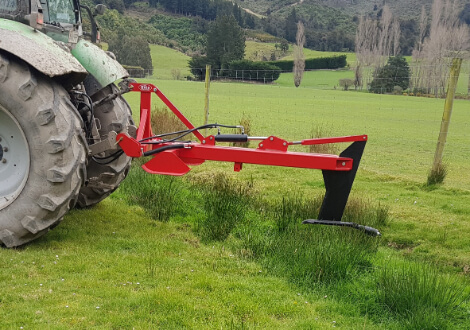
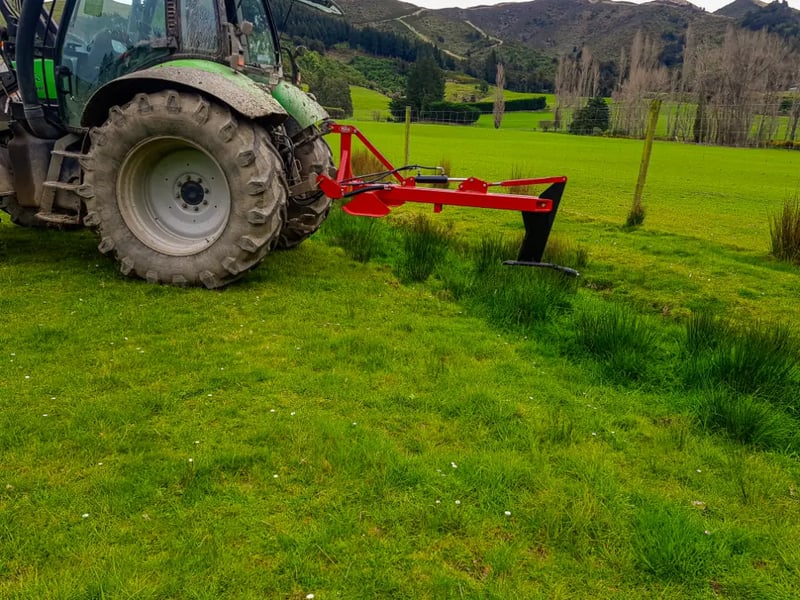
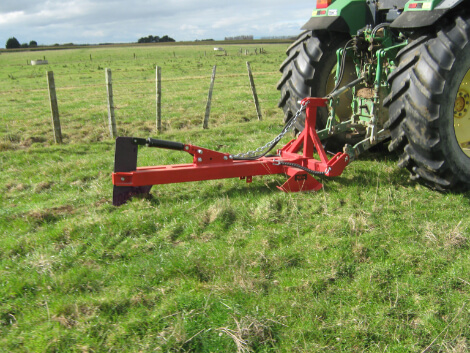
The long beams on the Rata Mole Plough produce a consistent gradient parallel to the surface, while the torpedo on the end of the blade directs the blade at a consistent depth. This provides the opening for the mole plug to expand the subsoil leaving a tunnel for the excess water to flow down, towards the main exit drain. The subsoil above the mole plug should be dry enough to avoid damage but give good traction and encourage upward fracturing to the surrounding soil.
Find out how to pull your equipment more effectively here
Unlike conditions for subsoiling, the soil at the working depth of the torpedo needs to be sufficiently malleable, so that the plug successfully forms a secure channel through the clay. This process, done at the right time can see mole drains lasting for up to twenty years.
Rata Mole Ploughs use our proprietary Quickleg design
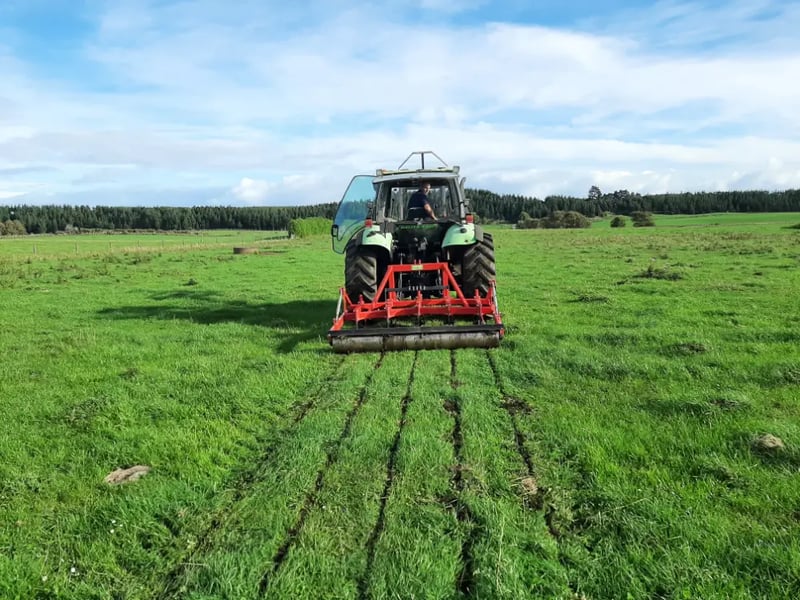
Mole drain channels deep enough to be in good clay, avoid damage by cultivators and spaced out evenly (approximately 1.8m apart) achieve good upward fracturing into surrounding soil and throughout the field.